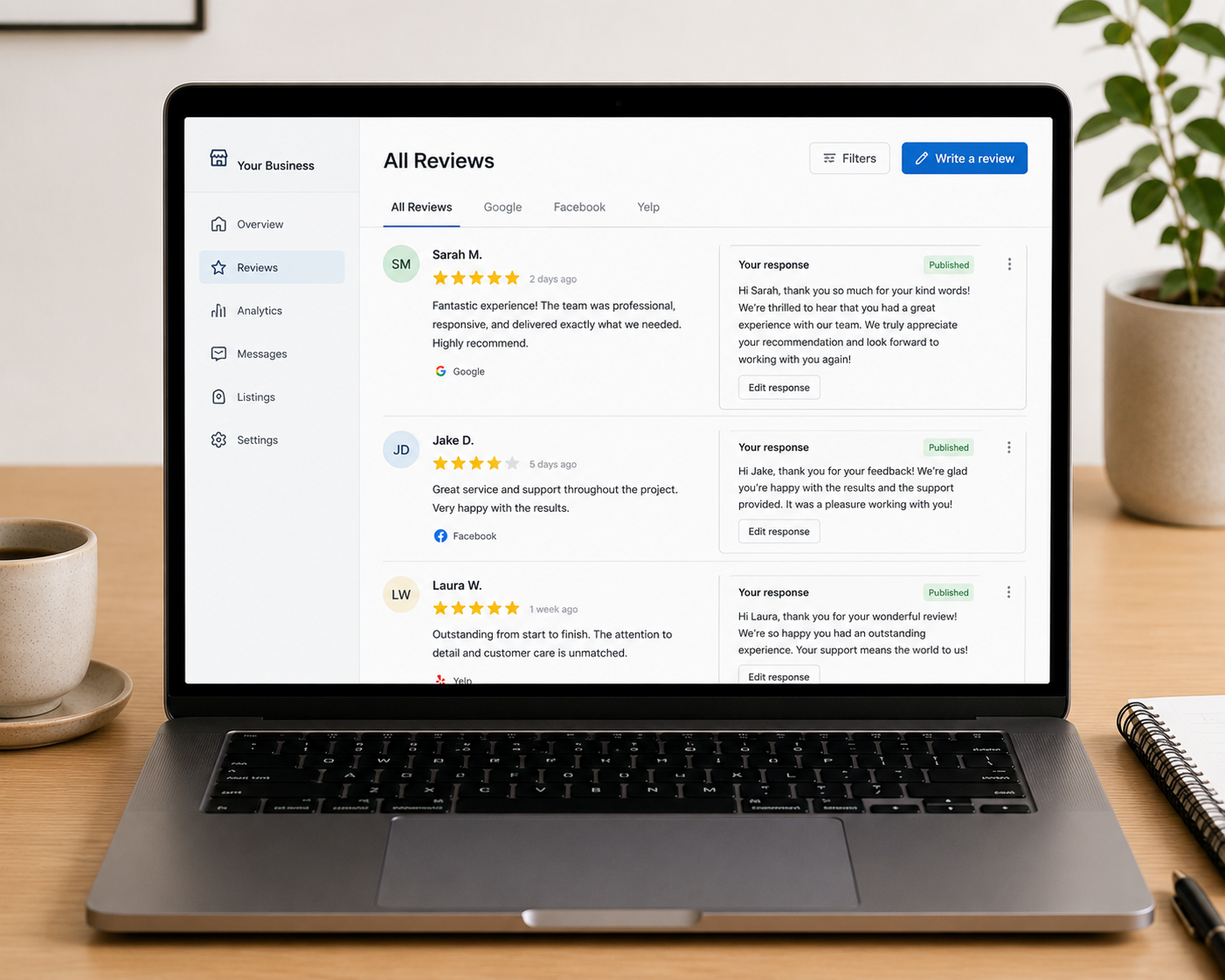
Customer reviews are one of the most powerful trust signals in modern business — and how you respond to them matters almost as much as the reviews themselves. Potential customers read your responses. They notice whether you handle criticism gracefully, whether you acknowledge positive feedback genuinely, and whether your tone is consistent and professional across all interactions. Learning how to use AI to respond to customer reviews gives you a process for producing high-quality, personalised responses consistently — without spending disproportionate time on each one. This guide covers the approach, the prompts, and the specific situations where AI adds the most value.
Why Review Responses Matter More Than Most Businesses Realise
Research consistently shows that potential customers pay close attention to how businesses respond to negative reviews. A thoughtful, professional response to a complaint demonstrates accountability and customer focus. It often converts sceptical potential buyers more effectively than an uninterrupted stream of five-star reviews, because it shows how the business behaves when things go wrong.
Positive review responses matter too, though for different reasons. They signal that the business pays attention to its customers, values feedback, and maintains an active, engaged presence. Generic responses — “Thank you for your review!” repeated identically across dozens of interactions — are worse than no response at all, because they communicate that the engagement is performative rather than genuine.
AI helps you avoid both failure modes — the defensive negative response and the generic positive one — by producing thoughtful, personalised drafts quickly enough that responding consistently becomes realistic.
The Core Approach: Context First
The most important principle for AI-assisted review responses is providing specific context before asking for a draft. A prompt that simply says “write a response to this review” produces a generic response. A prompt that provides the review text, the business context, and the specific situation produces something that feels genuinely written for that customer.
A practical prompt structure for any review response is: “I run [type of business]. A customer left this review: [paste review]. Please write a professional, genuine [warm/empathetic/brief] response that [addresses the specific points raised / thanks them for the specific detail they mentioned / acknowledges the issue and explains what we’ve done about it]. The tone of my business is [describe your tone — warm and friendly, professional and courteous, casual and approachable].”
This structure produces responses that are specific to the actual review rather than generic, and consistent with your brand voice rather than interchangeable with any other business.
Responding to Positive Reviews
Positive reviews are easier to respond to but still benefit from AI assistance, particularly for businesses that receive high review volumes. The goal is to acknowledge the specific detail the reviewer mentioned, express genuine appreciation, and add a brief personal touch that makes the response feel individual rather than templated.
For a five-star review that mentions a specific team member: “A customer left a great review mentioning that our team member Sarah was particularly helpful. Please write a warm, specific response that thanks them, acknowledges Sarah by name, and invites them back.”
For a review that mentions a specific product or service: “A customer left a five-star review specifically praising our handmade candles and the fast delivery. Please write a response that acknowledges both points specifically, thanks them warmly, and ends with an invitation to return.”
The AI produces responses that reference the specific points raised, making them feel personal without requiring you to write each one from scratch. Review and personalise each response before posting — a small edit that adds a specific detail or adjusts the phrasing to your voice makes a significant difference to how the response reads.
Responding to Negative Reviews
Negative review responses are where AI assistance adds the most value — and where the emotional difficulty of the task most commonly leads to poor outcomes. Responding to criticism under pressure produces defensive, unhelpful responses that damage your reputation further. AI removes the emotional charge by producing a measured, professional draft regardless of how you’re feeling about the review.
The structure of an effective negative review response follows a consistent pattern: acknowledge the customer’s experience without debating whether it was justified, apologise for the disappointment without necessarily accepting fault for disputed facts, explain briefly what you’ve done or will do to address the issue, and invite the customer to contact you directly to resolve it.
“A customer left a negative review saying: [paste review]. Please write a professional, empathetic response that acknowledges their experience, apologises for the disappointment, briefly mentions that we take this kind of feedback seriously, and invites them to contact us directly at [contact method] to resolve the issue. Do not be defensive or dispute the facts in the review. Tone: calm, professional, and genuinely concerned.”
Handling Unfair or Inaccurate Reviews
Occasionally, businesses receive reviews that are factually inaccurate, refer to a different business, or appear to be malicious. These require a particularly careful response — one that is professional and measured without validating inaccurate claims or escalating the situation.
AI is useful here because it approaches the situation without the indignation that makes these responses so difficult to write well. “A customer left a review that appears to describe an experience that didn’t happen at our business — they mention [specific inaccuracy]. Please write a professional, non-confrontational response that politely notes that we cannot find a record of this experience and invites them to contact us directly so we can investigate and help if there has been a misunderstanding. Do not be accusatory.”
This approach handles the situation with professionalism while opening a channel for resolution, without publicly disputing the review in a way that looks defensive to other readers.
Building a Review Response System
For businesses that receive regular reviews, the most efficient approach is to build a simple review response system using AI rather than treating each response as an individual task.
Set aside thirty minutes once a week to review and respond to all new reviews in a single session. Open your AI tool, paste in each review with its context prompt, generate the response, personalise it with any business-specific details, and post. A week’s worth of review responses — across Google, Trustpilot, Etsy, or whichever platforms you use — typically takes under thirty minutes with this approach, compared to the sporadic, time-consuming process most businesses use.
For further context on how this fits into a broader AI-assisted business workflow, our guide to AI tools for solopreneurs covers the weekly workflow structure that makes these habits sustainable. And our guide to AI for small business owners covers additional customer communication applications alongside this one.